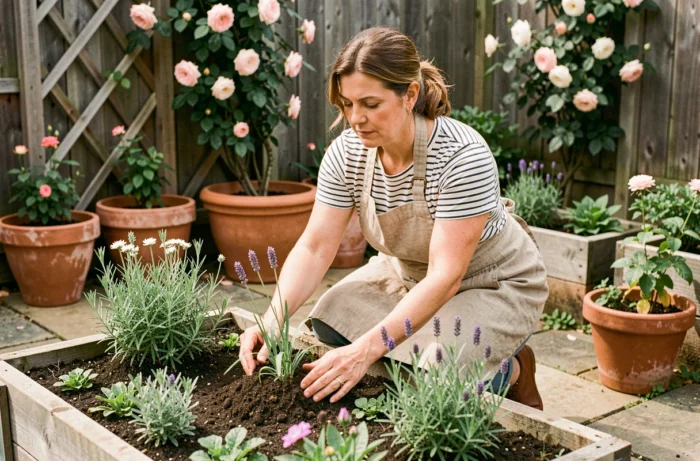
A lavender mass scorched by July, ornamental grasses wilting due to unsuitable soil, a woven resin garden set warping after two summers: every year, the same mistakes recur in gardens that follow trends without considering the terrain. Enhancing a garden this season starts with a simple rule: what grows well in your garden depends on your soil, your exposure, and your availability for maintenance.
Soil and local climate: the filter that garden trends overlook
Before choosing the plant palette of the season, we start with a basic soil diagnosis. Clay, sandy, limestone: each type imposes its constraints on drainage and water retention. A compact clay soil in summer suffocates the roots of Mediterranean plants that we see everywhere in magazines, while sandy soil lets water escape too quickly for hydrangeas.
The test is simple: take a handful of moist soil and squeeze it. If it forms a compact ball that doesn’t fall apart, it’s clay. If it crumbles immediately, it’s sand. Between the two, you have a loamy soil, which is more versatile.
Adapting plants to the existing soil reduces watering and maintenance by half. Rather than correcting the soil with expensive amendments, we select species that thrive naturally in it. Yarrow, sedums, and euphorbias tolerate poor, dry soils. Astilbes and hostas prefer cool, moist corners. You can find concrete ideas in the recent articles on Ambiance Jardin that combine current trends with the reality of the terrain.
Garden decor trends compatible with realistic maintenance
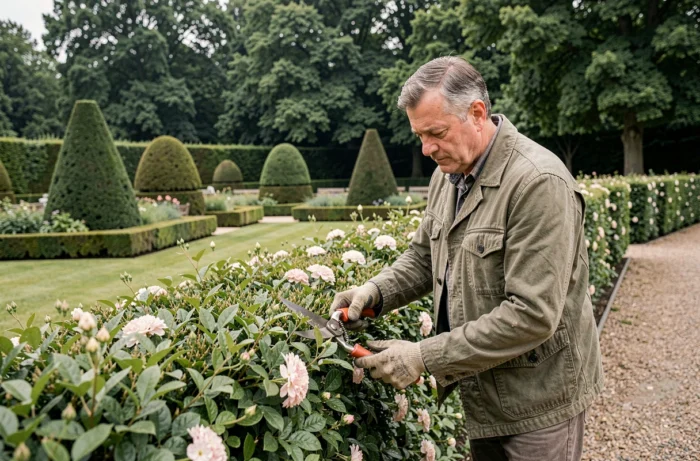
The key colors of the season revolve around sage green, sandy beige, and terracotta. These shades apply equally to furniture, glazed terracotta pots, or wall coatings. The advantage: they age well and hide dirt, which is important when you don’t want to wash your terrace every two weeks.
Wood furniture and weather resistance
Wood remains the dominant material for garden tables and sets this year. Choose at least class 4 (robinia, chestnut, pressure-treated wood) if the furniture stays outside all year. An untreated wood set will gray in one season and split in two.
Flat woven resin is more UV resistant than round resin, but feedback on this varies by manufacturer. In any case, store cushions out of the elements between uses: this is the gesture that extends the lifespan of the furniture.
Terracotta pots and size selection
Glazed terracotta pots are making a strong comeback, often in generous sizes. The size of the pot directly affects the frequency of watering: a small diameter pot dries out in a few hours in full sun. For a south-facing terrace, prioritize wide and deep containers filled with a draining substrate.
- Raw terracotta: breathes well but freezes and cracks in regions with harsh winters. Bring indoors or protect with a cover.
- Glazed terracotta: more frost-resistant, retains moisture better, available in trendy shades (terracotta, sage green, cream).
- Fiber-reinforced concrete: heavy but nearly indestructible, ideal for large plants (olive, citrus) that stay in place all year.
Low and targeted outdoor lighting: the trend that truly changes the ambiance
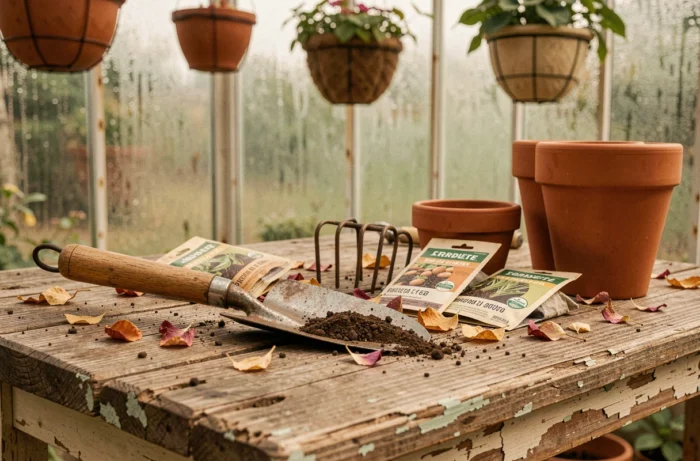
Garden lighting is evolving towards discreet fixtures positioned at ground level or mid-height, highlighting a plant, a path, or a wall rather than flooding the terrace with white light. This choice has a direct effect on visual comfort in the evening and on electricity consumption.
Low and targeted lighting enhances plant volumes without dazzling. Place a recessed spotlight at the base of a notable tree, a solar string light along a path, or a stake-mounted light in a flowerbed. The idea is not to illuminate everything, but to create visual landmarks.
Practically, solar LED stakes have improved in autonomy in recent years. They can be installed without wiring and moved according to the seasons. For dining areas, a suspension or an outdoor floor lamp plugged into the mains is more reliable than a solar model, especially in late season when sunlight decreases.
Water management in the garden: the real issue behind plant trends
There is much talk of dry gardens, ornamental grasses, and drought-resistant perennials. The trend is real and relevant, but it does not exempt us from thinking about the overall management of water on the plot.
Mulching remains the most cost-effective gesture to save water in the garden. A layer of five to ten centimeters of wood chips, straw, or miscanthus limits evaporation, slows down weeds, and nourishes the soil as it decomposes. We renew it once or twice a year.
- Mulch all flowerbeds and tree bases at planting, not in the middle of summer when the soil is already dry.
- Water in the evening or early morning, at the base, never by sprinkling on the foliage.
- Install a rainwater collector connected to a gutter: the useful capacity depends on the roof area, but even a small model covers the watering of pots on the terrace for several weeks without rain.
- Group plants by water needs: dry areas together, cool areas together, to avoid overwatering some while trying to save others.
Parasol and shading: protecting plants as well as occupants
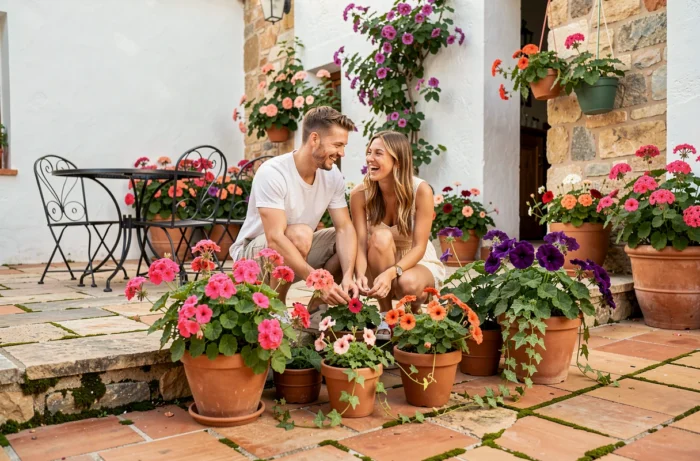
A cantilever umbrella or a shade sail serves not only human comfort. Positioned above a pot area or a young flowerbed, they reduce the water stress of plants during the hottest hours. Shading young plants between noon and four o’clock speeds up their recovery.
Choose a wind-resistant umbrella (weighted base, aluminum pole, UV-treated fabric) rather than a decorative model that ends up flipped after the first gust. The sale of cantilever umbrellas explodes every summer, but quality varies greatly: checking the fabric weight and the tilting mechanism before purchase avoids unpleasant surprises.
A garden enhanced this season is a garden where every decor choice has been filtered through the reality of the soil, climate, and available time. Trends come and go, as do poorly adapted plants. Those that remain are the ones placed in the right spot from the start.