
McDonald’s employs a significant portion of the fast food workforce in France. Working at McDonald’s means holding a position governed by standardized procedures, variable hours, and a fast pace. The typical profile ranges from students on part-time contracts to crew members aiming for a managerial position after a few years.
Standardized Training at McDonald’s: An Underestimated Framework
One of the least discussed aspects of working at McDonald’s concerns the highly structured initial training. Every crew member follows the same learning path, regardless of the restaurant. The tasks, positions (kitchen, register, dining area, drive-thru), and hygiene rules are taught according to a precise protocol.
This standardization offers a concrete advantage: the onboarding process is quick, even without prior experience. A new employee can be operational in just a few days in a basic position. The skills acquired (stress management, teamwork under pressure, adherence to health standards) are transferable to other sectors of the restaurant or retail industry.
By exploring the benefits of working at McDonald’s, it becomes clear that this standardized training provides a solid professional foundation for a first job.
Hours and Scheduling at McDonald’s: Flexibility Has Two Sides
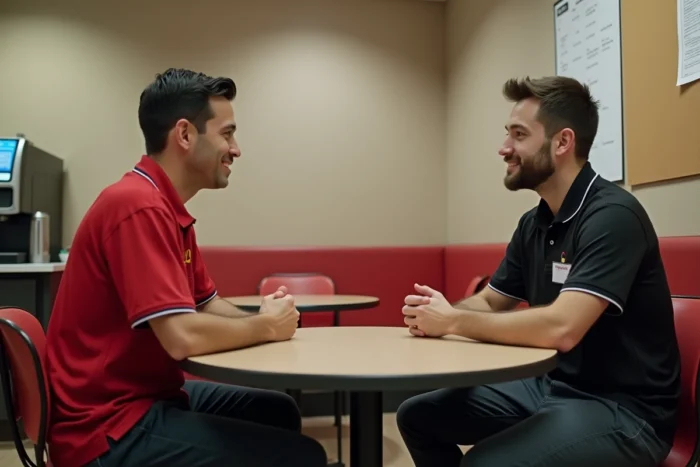
The issue of hours comes up in most employee feedback, and it deserves to be examined closely. McDonald’s offers part-time contracts tailored for students, with shifts in the evening or on weekends. This flexibility makes it easier to balance studies and work.
The downside is less visible at the time of hiring. Several crew members report last-minute schedule changes, unanticipated service extensions, and calls outside of scheduled hours to cover absences. The actual flexibility in one’s schedule largely depends on the manager and the restaurant.
Night Work and Hourly Range
In restaurants that are open continuously, night work is a structural element of daily operations. Night shifts can be assigned with little notice. The hourly range often exceeds what a standard contract suggests, especially in high-traffic establishments.
Crew members who negotiate their constraints from the outset (fixed unavailability, refusal of night shifts) generally achieve a better balance. Those who accept everything without setting limits find themselves more exposed to last-minute changes.
Work Pace and Daily Conditions for Crew Members
The pace in a McDonald’s restaurant is intense and physical. The crew member position involves standing for several hours, quickly moving from one task to another (kitchen, counter, cleaning), and maintaining a high pace during rush hours.
- The lunch and dinner rushes require a rapid succession of orders, with little downtime between tasks
- Versatility is expected from the first weeks: a crew member may be assigned to the fryer and then to the register in the same shift
- Customer contact is constant, including in tense situations (complaints, long lines)
Working at McDonald’s is primarily a physical and repetitive job. Employee reviews on Indeed describe an environment where the body is continuously engaged. Breaks exist but remain short, and the pressure for quick service does not lessen.
Team Atmosphere: A Highly Variable Factor
The atmosphere among colleagues emerges as the main factor of satisfaction or dissatisfaction. In some restaurants, teams are close-knit, and mutual support compensates for the demanding pace. In others, the constant turnover prevents the formation of lasting bonds.
The quality of local management plays a decisive role. A respectful and organized manager transforms the experience. Authoritarian or disorganized supervision makes daily life difficult, as confirmed by numerous testimonials on employer review platforms.
Salary and Career Advancement at McDonald’s
The salary of a crew member at McDonald’s is at the minimum wage level. Overtime, when paid, supplements income, but the salary remains modest compared to the workload.
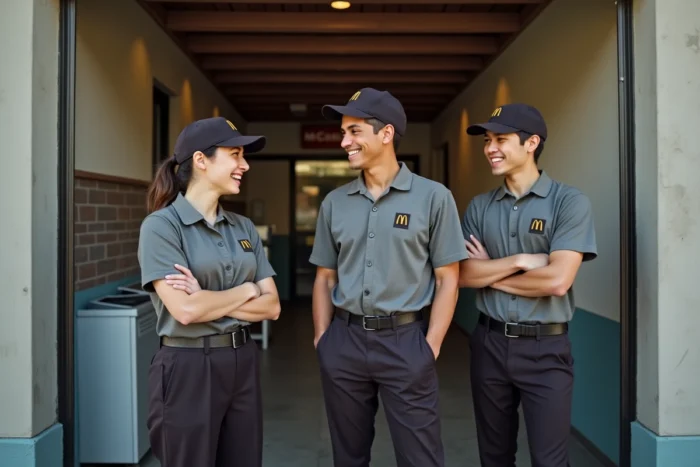
Internal advancement exists and serves as a real lever for motivated employees. The typical career path leads from crew member to manager, with increasing responsibilities: team management, stock monitoring, service organization.
- The transition from crew member to manager generally takes a few years and relies on regular internal evaluations
- Manager positions open access to higher pay and management responsibilities
- Some franchisees offer training or driver’s license assistance, but these benefits vary from one restaurant to another
The experience gained as a manager at McDonald’s is recognized in the restaurant sector. Skills in team supervision and operational management are an asset on a CV, even outside of fast food.
What the Contract Doesn’t Always Mention
One rarely discussed point concerns the difference between the conditions presented at hiring and the reality on the ground. The contract specifies a set number of hours and a position, but the imposed versatility, schedule changes, and daily pressure are not included in the clauses.
Employees who make the most of their time at McDonald’s are those who set their limits from the start, view the position as a formative step, and leverage the transferable skills acquired. The job remains demanding, the salary modest, and the pace intense. The value of the experience largely depends on the restaurant, the manager, and the duration of one’s stay.