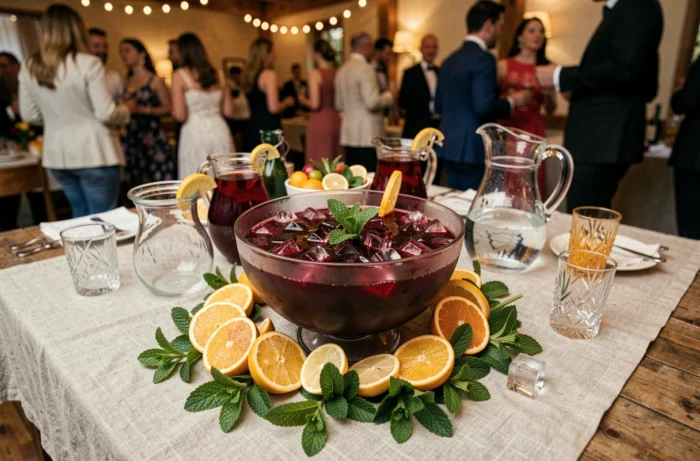
The Jacqueline cocktail is based on three ingredients that everyone knows: white wine, lemonade, and grenadine syrup. Transitioning from six glasses to ten liters for a party is not just about multiplying the quantities. The volume changes the game regarding dosage, temperature, and serving timing.
White wine and lemonade ratio: the dosage that makes the difference at 10 liters
In a single glass, an imbalance between the wine and lemonade goes almost unnoticed. At ten liters, the slightest error in proportion affects every cup served. Have you ever tasted a punch that was too sweet or too sour at a party? The problem almost always stems from a ratio that is poorly suited to the volume.
The tried-and-true base for ten liters combines five liters of dry white wine, four liters of lemonade, and one liter of grenadine syrup. This 50/40/10 breakdown maintains the balance between the freshness of the wine, the fizz of the lemonade, and the fruity sweetness of the grenadine.
If you follow a classic 10-liter Jacqueline cocktail recipe, keep in mind that the white wine must remain dry. A semi-dry or sweet wine mixed with grenadine syrup produces a cloying drink by the second glass. A muscadet, an entre-deux-mers, or a picpoul are perfect choices.
The grenadine syrup should not exceed ten percent of the total volume. Beyond that, the pink color turns opaque red, and the sugar masks all the freshness of the mix.
Temperature and fizz of the Jacqueline cocktail in large quantities
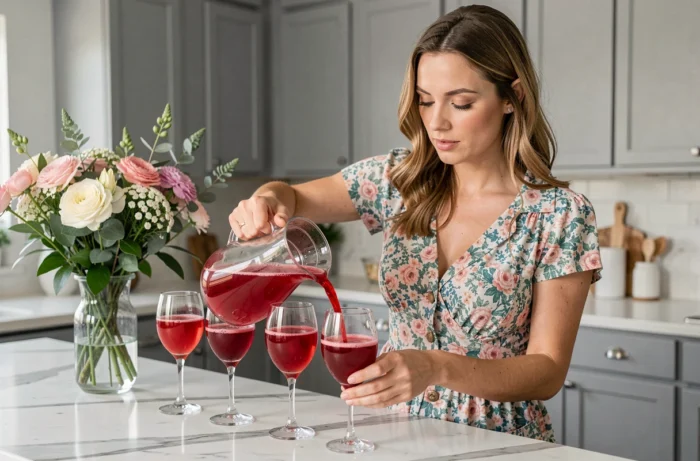
The real trap of preparing in volume is the temperature. Ten liters take much longer to cool than a bottle. Preparing the Jacqueline the day before and storing it in the refrigerator seems logical, but this method poses a specific problem: the lemonade loses its bubbles within a few hours once mixed.
Prepare the base the day before, add the fizz at the last moment
The solution is simple. The day before, mix the white wine and grenadine syrup in a large container, then chill it. The next day, pour in the well-chilled lemonade just before serving. This way, you preserve the bubbles and freshness without sacrificing practicality.
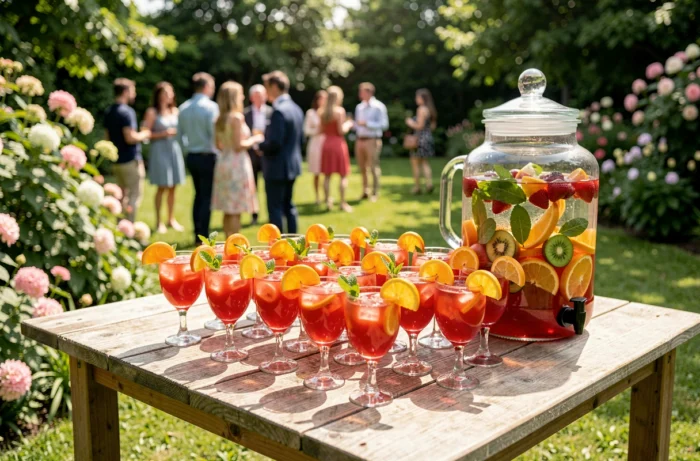
To maintain the temperature during the party, immerse ice packs directly into the punch bowl or drink fountain. Avoid loose ice cubes: as they melt, they dilute the cocktail and disrupt the dosage you calibrated.
- White wine and grenadine mixed the day before in the refrigerator (non-fizzy base)
- Lemonade added 10 to 15 minutes before the first serving
- Ice packs or frozen water bottles in the container to cool without diluting
- Lemon slices added at the time of serving for freshness and presentation
Non-alcoholic variation and fruity alternatives for all guests
A party brings together various profiles: designated drivers, pregnant women, people who do not drink alcohol. Planning a non-alcoholic version of the Jacqueline avoids multiplying different drinks while maintaining a visual unity on the table.
Replace the white wine with white grape juice. The result retains the characteristic pink hue and some of the aromatic complexity. The taste changes, but the drink remains consistent with the alcoholic version served alongside.
Variations with fresh fruits to enrich flavors
Adding fresh fruits transforms a standard Jacqueline into a visually spectacular drink. Quartered strawberries, whole raspberries, or peach slices add a splash of color and release their aromas into the mix over the course of serving.
A detail often overlooked: acidic fruits like lime alter the sweet balance. If you add citrus fruits, slightly reduce the amount of lemonade to compensate for the extra acidity. Always taste before serving, especially at this scale.
Serving Jacqueline at an association event: the temporary licensing rule
This point is not found in any competing recipe, yet it can cost you dearly. If your party is organized by an association and open to the public, serving an alcoholic Jacqueline falls under the temporary beverage licensing regime outlined in the Public Health Code.
Specifically, an association can obtain no more than 5 temporary beverage licenses per year. Only beverages from groups 1 and 3 (including white wine) are permitted, which excludes spirits but allows the Jacqueline without issue.
The main constraint is administrative: a written declaration to the town hall at least 15 days before the event is mandatory. Without this step, the fine can reach 3,750 euros. For a private party (birthday, wedding at home), this obligation does not apply.
- Association party open to the public: declaration to the town hall required 15 days in advance
- Maximum of 5 licenses per association per calendar year
- White wine allowed (group 3), spirits prohibited without the appropriate license
The ten-liter Jacqueline cocktail remains one of the most accessible preparations for a large table. The 50/40/10 dosage, the separation between base and fizz, and a non-alcoholic version alongside cover most festive situations. If your event is associative, the declaration to the town hall takes five minutes and avoids unnecessary financial risk.