
The choice of equipment for seniors is not limited to a list of products. It involves a piece-by-piece analysis, knowledge of current standards, and a deep understanding of age-related pathologies. We often observe unsuitable, oversized, or poorly positioned installations that end up creating new risks instead of reducing them.
Ergonomic Criteria and Accessibility Standards for Senior Equipment
Equipment suitable for home care cannot be chosen from a catalog. It must meet specific anthropometric constraints: gripping height, residual grip strength, available joint range. Without prior assessment, the risk of underutilization or misuse is real.
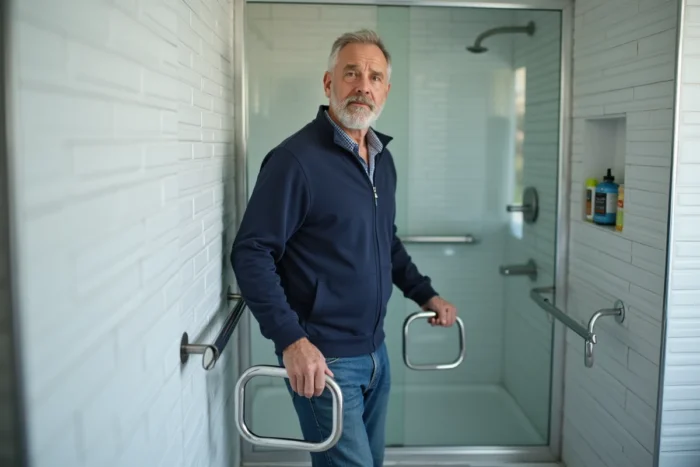
Grab bars, for example, must comply with a diameter between 30 and 40 mm to ensure an effective grip, even in cases of hand rheumatism. Their installation requires a wall support capable of withstanding a tensile load of at least 100 kg. Mounting a bar on drywall without reinforcement is a common and potentially dangerous mistake.
For the bathroom, a step-free shower with a threshold of less than 2 cm remains the standard. The ultra-flat shower tray must provide a slip-resistant surface rated PN24 minimum (DIN 51097 standard). A foldable shower seat, mounted between 45 and 50 cm from the floor, complements the setup for individuals whose ability to stand for long periods is compromised.
We systematically recommend involving an occupational therapist before any purchase. This professional assesses the motor and cognitive abilities of the individual and then recommends tailored solutions. Among the equipment offered on Happy Seniors, several categories correspond to these technical recommendations, from bathroom safety to mobility aids.
MaPrimeAdapt’: Funding for Housing Adaptation Work
MaPrimeAdapt’ is the central funding mechanism since 2024, managed by Anah. This aid targets individuals over 70 years old, and from 60 years old in cases of loss of autonomy or disability, whether they are homeowners or renters.
The reimbursement rate varies according to the household’s resources. Households with the lowest incomes can receive up to 70% of the cost of the work, while others can receive up to 50%, within a ceiling of 22,000 euros excluding tax. This ceiling covers a wide range: stairlifts, secure showers, home automation, motorization of shutters.
Support from an occupational therapist is an integral part of the MaPrimeAdapt’ process. Their intervention beforehand helps avoid unnecessary equipment and focuses the budget on high-value items for autonomy.
- Secure shower with seat and grab bar: the most frequently funded item, as the bathroom accounts for the majority of falls at home
- Stairlift or platform lift: relevant only if the home has a floor used daily; otherwise, adapting the ground floor is preferable
- Home automation (automatic lighting, motorized shutters, motion detectors): often underestimated, it reduces unnecessary movements and risky handling
Teleassistance and Connected Sensors: Beyond the Classic Pendant
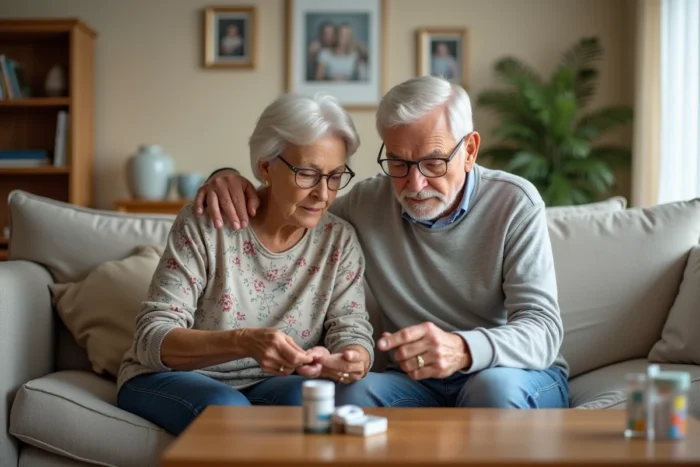
The alert pendant worn around the neck remains widespread, but its limitations are known. Many seniors do not wear it at night, forget it when leaving the shower, or refuse to activate it for fear of bothering someone. Next-generation devices address these shortcomings.
Passive motion sensors analyze movement habits within the home and trigger an alert in case of anomalies: prolonged absence of movement, non-opening of the refrigerator beyond a time threshold, fall detected by accelerometer. These systems require no voluntary action from the person.
Smartwatches designed for seniors now integrate automatic fall detection, heart rate monitoring, and geolocation. Their benefit is twofold: they also work outdoors, where traditional fixed teleassistance does not cover.
Criteria for Choosing a Teleassistance System
The first criterion is battery life. A device that discharges in less than 24 hours imposes a daily recharging constraint, which is rarely adhered to by someone with cognitive autonomy loss.
The second concerns interoperability. Some systems work exclusively with a specific internet box or dedicated mobile network. We recommend checking network compatibility before any purchase, especially in rural areas where 4G coverage may be insufficient.
Kitchen Layout: An Often Overlooked Aspect
The kitchen is the second most accident-prone room in the home after the bathroom. Burns, cuts, and falls related to accessing high storage represent recurring risks.
Induction cooktops are a better alternative to gas: they eliminate the risk of leaks and flame burns, and the surface cools quickly after use. Models with automatic pot removal detection and built-in timers add a layer of passive safety.
Sliding storage at mid-height avoids the use of step stools. Height-adjustable work surfaces, originally designed for accessible kitchens, provide comfort for meal preparation for individuals alternating between standing and sitting positions.
- Thermostatic faucets: limit the maximum water temperature and prevent burns, to be installed as a priority if the water heater is set above 50 °C
- LED under-cabinet lighting: improves visibility of the work surface without glare, reducing the risk of cuts during food preparation
- Slip-resistant flooring rated R10 minimum: smooth tiles become dangerous as soon as a drop of water or oil falls to the ground
Adapting housing for seniors at home does not follow a one-size-fits-all approach. Each configuration depends on the housing, pathologies, and the individual’s level of autonomy. Involving an occupational therapist beforehand remains the best investment, even before purchasing the first piece of equipment. MaPrimeAdapt’ also funds this service, which removes the financial barrier for the initial assessment.