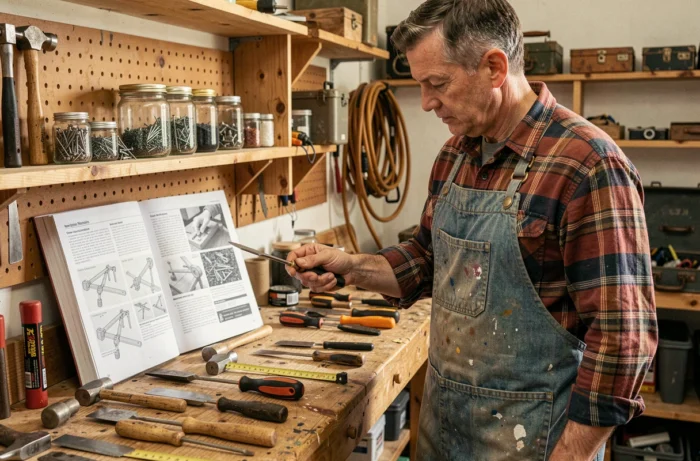
DIY encompasses dozens of technical specialties, from plumbing to carpentry, including home electrical work and wall finishing. Finding reliable and centralized DIY resources remains a real challenge when information is scattered across forums, videos, and product sheets.
This article lays the groundwork for identifying what makes a resource valuable, leveraging physical repair networks, and taking advantage of recent regulatory frameworks that change the lifespan of tools.
Availability of spare parts for powered tools: what the law changes
Before looking for tips to repair or maintain a tool, it’s essential to know if spare parts are still available. The Climate and Resilience Law has extended since 2023 the obligation to provide spare parts for certain powered DIY and gardening tools, with a minimum availability period of five years.
This regulatory constraint directly alters the way one buys and maintains their equipment. A drill or brush cutter purchased from a manufacturer subject to this obligation can be repaired several years after purchase, avoiding complete replacement.
To find technical sheets, repair tutorials, and maintenance guides suitable for each type of tool, browsing the entire Blog du Bricoleur site allows for quick identification of the category that meets one’s needs.
The AGEC law complements this system by creating extended producer responsibility (EPR) channels for DIY and gardening items. Manufacturers now finance the collection and processing of their products at the end of their life. For DIY enthusiasts, this means that collection points are multiplying and some distributors are accepting used tools.
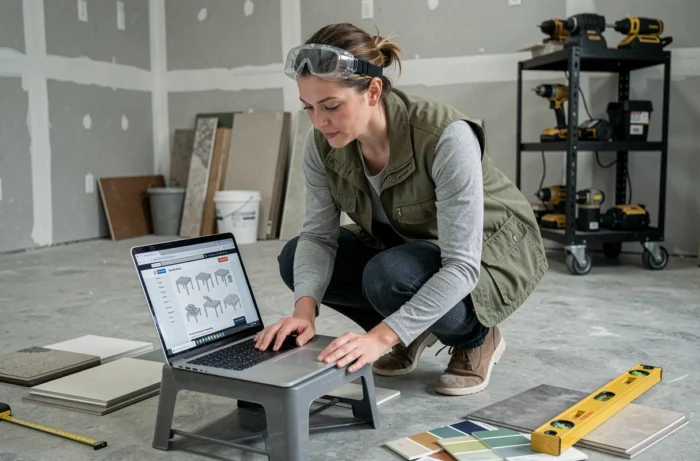
DIY libraries, repair cafés, and resource centers: the physical networks to know
Online content does not always replace direct support. Several French regions are deploying local structures that lend tools, organize collaborative repair workshops, and guide towards best practices.
Three types of complementary places
- DIY libraries function like tool libraries. You can borrow a circular saw or a heat gun for a few days, which avoids purchasing equipment used only once.
- Repair cafés offer regular sessions where volunteers help diagnose and repair everyday objects, including small power tools.
- Resource centers collect, repair, and resell DIY equipment at reduced prices, sometimes offering introductory workshops.
The Pays Basque urban community lists several resource centers, repair workshops, and recycling centers in its territory. The Lens-Liévin urban community also maintains regular repair café sessions and a resource center accessible to the public.
These places constitute a DIY resource often overlooked in online searches. Before purchasing a specialized tool or discarding a broken device, checking for the existence of a DIY library or repair café in one’s municipality can save time and money.
Assessing the reliability of an online DIY resource
The sheer volume of content available online creates a sorting problem. A viral video is not necessarily a reliable source, and an active forum may spread dangerous advice regarding electricity or plumbing.
Concrete criteria for filtering information
Quality DIY content can be recognized by a few markers. The author identifies the applicable standards for the described project (NF C 15-100 for electricity, DTU for structural work). The steps are detailed with the specific tools needed, not vague phrases like “a suitable tool.”
Websites that structure their content by category (plumbing, electricity, carpentry, decoration) facilitate navigation. An organized site map by theme allows one to check in seconds if the sought topic is covered, and to what depth.
Be cautious of content that mixes decorative tips with technical interventions without distinguishing the required skill levels. Installing a floating shelf and modifying an electrical panel do not fall under the same risk category.
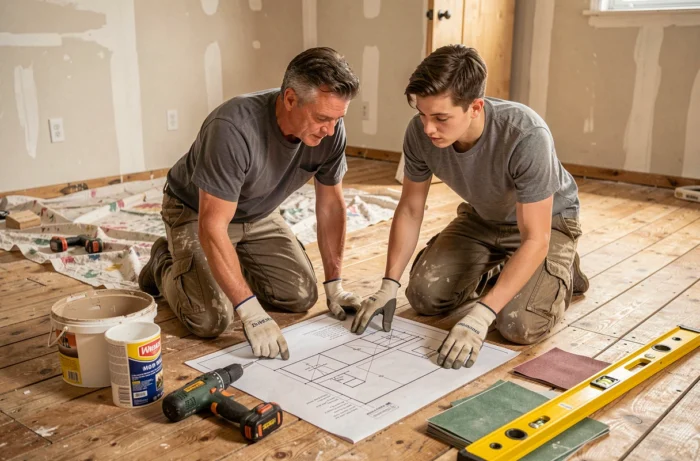
Organizing your DIY monitoring without wasting time
Accumulating bookmarks and “watch later” videos is not an effective method. An effective DIY monitoring strategy targets two or three specialties rather than trying to follow everything.
Project-based classification method
Create a folder for each planned project (bathroom renovation, attic insulation, workshop setup) and only store verified resources in it to avoid overload. Each folder contains at least a normative sheet, a step-by-step tutorial, and a list of materials with precise references.
RSS feeds remain an underutilized tool for following specialized blogs without relying on social media algorithms. Most structured DIY sites offer a feed to subscribe to via a free aggregator.
For projects involving powered tools, keeping track of the purchase date and manufacturer allows you to verify if spare parts are still available under the five-year legal obligation. This simple reflex prevents discovering the issue at the moment of failure.
DIY becomes more efficient when resources are sorted in advance, local physical networks are identified, and the regulatory framework regarding tool reparability is taken into account. Centralizing reliable sources remains the first technical step even before picking up a screwdriver.